Top 5 Common Mistakes in Planetary Milling and How to Avoid Them
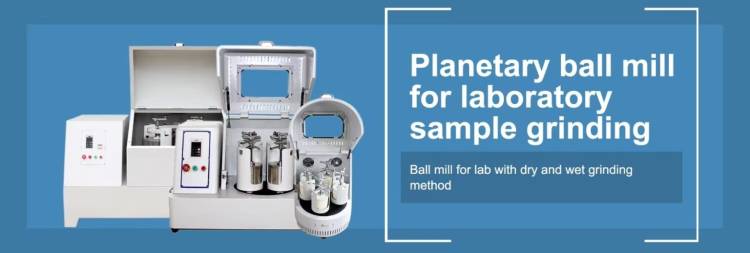
Planetary balls mills are considered as the very workhorses for the field of nano technology and materials science, and they are incredibly capable in the production of very high amounts of energy which helps in achieving sub-micron particle sizes.
However, they function at very high speeds (which most of the time surpasses 30g to 50g of acceleration), even a little bit of mistake can lead to the damage to the samples, which further pollute the outcomes, or even cause mechanical failure. If you want your lab to function with effectiveness, you must avoid these five common pitfalls:
1. Ignoring the Ball-to-Powder Ratio (BPR)
One of the most common mistakes which is conducted again and again, is when you use guessing as the measure of the amount of media and samples. If you are using way too much powder, the balls move in a way as if they are moving through a “cushion”, which will cause the dampening of the impact energy.
And if you have too little of the powder, the balls will begin to spend their own energy by hitting on each other and also on the jar walls, which will lead to excessive wear.
The Fix: If you stick to a standard BPR (which normally is between 5:1 and 20:1 by weight) depending on the density of the material you are using.
2. Failing to Balance the Load
A planetary ball mill mainly consists of a high speed centrifugal force. If you are running a single jar or two jars which have a lot of weight difference, which will generate an asymmetry in the center of gravity. And this will cause a high amount of vibration, noise and premature bearing failure.
The Fix: If you use a counterweight or keep the jar setups which are of the same weight, size etc., you will not have this issue. You must also make sure that the total mass of the jar, balls and sample must be kept on the opposite sides within a few grams of each other.
READ MORE: What is a Planetary Ball Mill?
3. Overfilling the Grinding Jar
You could be tempted to fill the jar up to the brim, thinking that it will help you in maximizing your throughout. However, milling must have free space, otherwise the movement of the balls will be restricted and they can collide with each other.
The Fix: To fix this, you can remember the golden rule, which is the One-Third Rule: which is: 1/3 sample/balls, 1/3 free space, and 1/3 for the remaining media volume. )
4. Overheating and "Caking"
High-energy milling will generate a very high amount of heat. So if you are continuously running the mills for many hours without any break in between, it will make the powder stick to the walls (also known as caking), or worse can happen like, it undergoes an unnecessary phase change.
The Fix: Program it to work in interval cycles. After every 10-15 minutes of milling, let it rest and cool down for 5-10 minutes.
5. Material Incompatibility
Using stainless steel balls to grind silica can give you a very high amount of iron contamination. Conversely, if you are using soft jars for hard ceramic powders, which will cause erosion in the jar itself.
The Fix: If you make sure that the Mohs hardness of your grinding media is more than your sample, the problem will be fixed. And if you use Zirconia or Tungsten Carbide for hard materials, it will help in maintaining the purity.https://www.youtube.com/watch?v=qIqeBcRDXqE
Upgrade your lab today!
If you want to experience the superior level of sub-micron grinding, you must buy Laboteck’s Venus Series Planetary Ball Mills.
We offer precision-engineering for high-energy performance, by working with us you will achieve consistency in professional-grade outcomes.